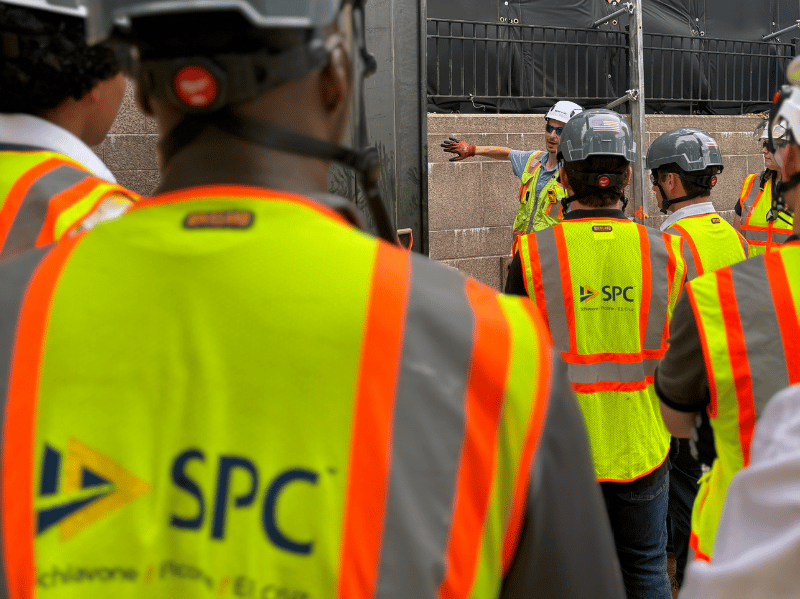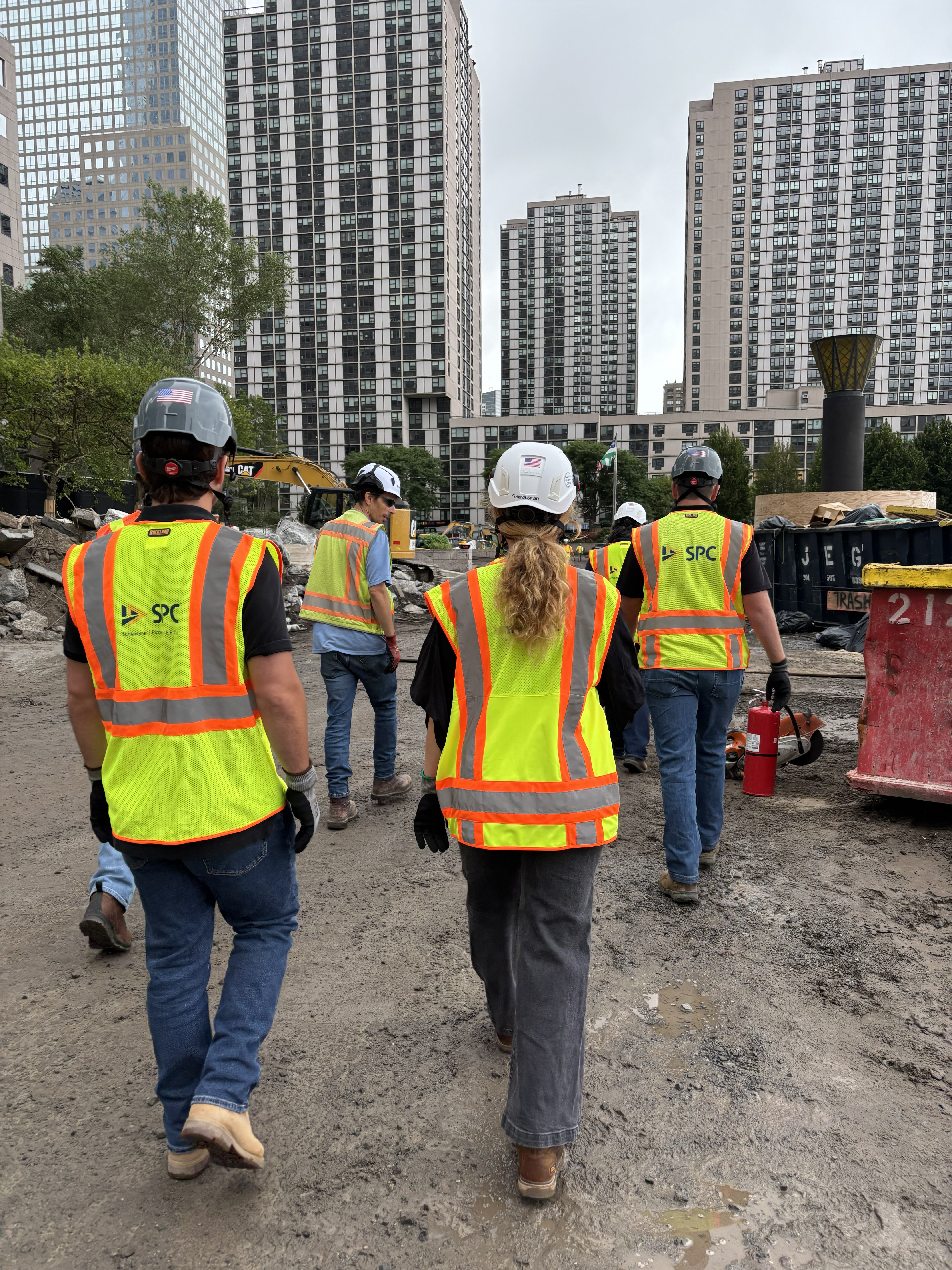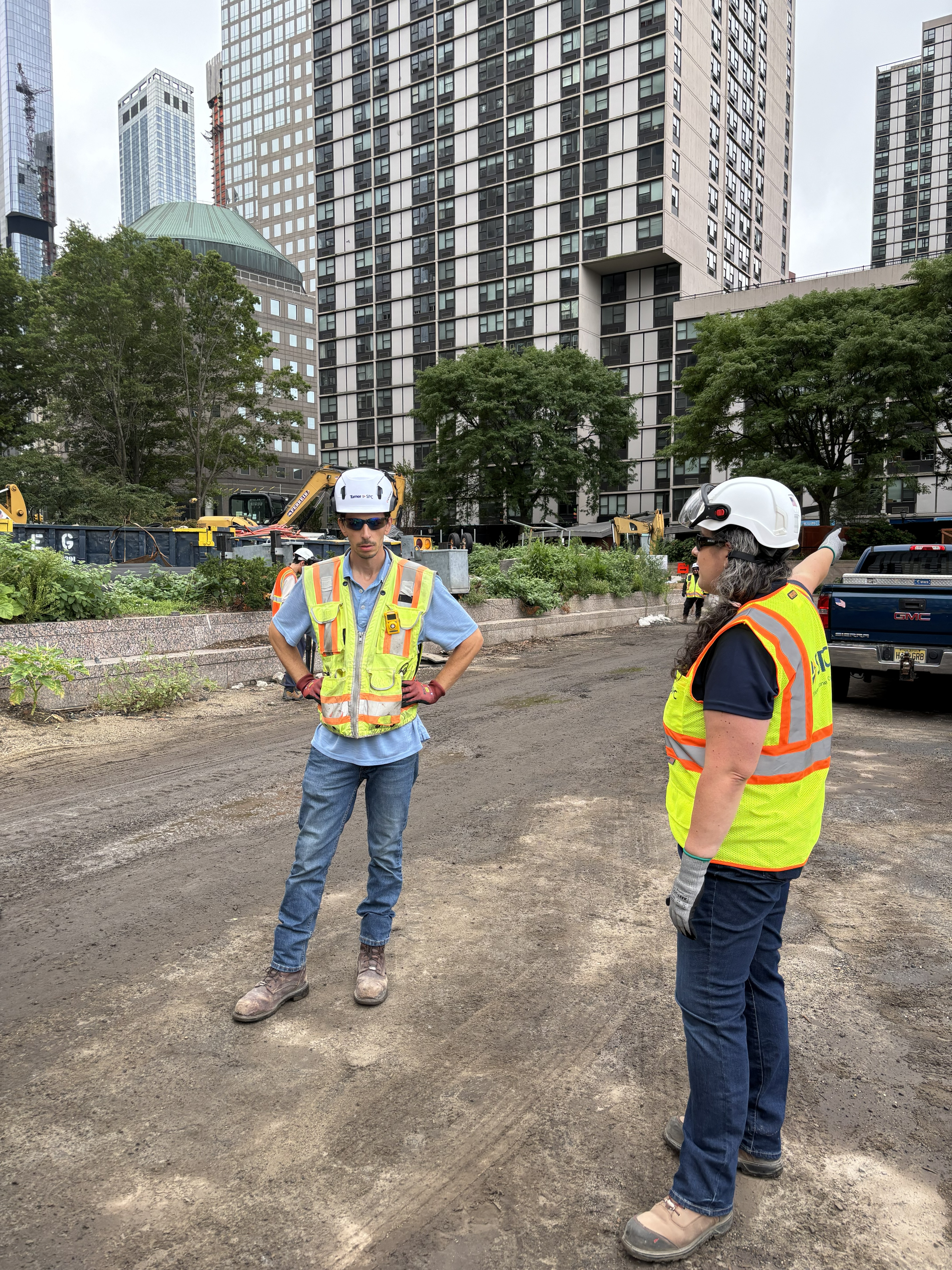
SPC Construction's 2026 Summer Interns head to the field for a behind the scenes look at the work being done at the North/West Battery Park City Resiliency Project.
As a continuation of SPC’s intern site tour program, interns recently had the opportunity to visit the North/West Battery Park City Resiliency (BPCR) Project and hear directly from the team helping bring this critical infrastructure initiative to life.
The day began with a presentation led by SPC and Turner interns working on the project. Together, they developed an informative presentation that introduced their peers to the history of Battery Park City, the scope and objectives of the BPCR Project, and its importance to New York City’s long-term resiliency efforts.
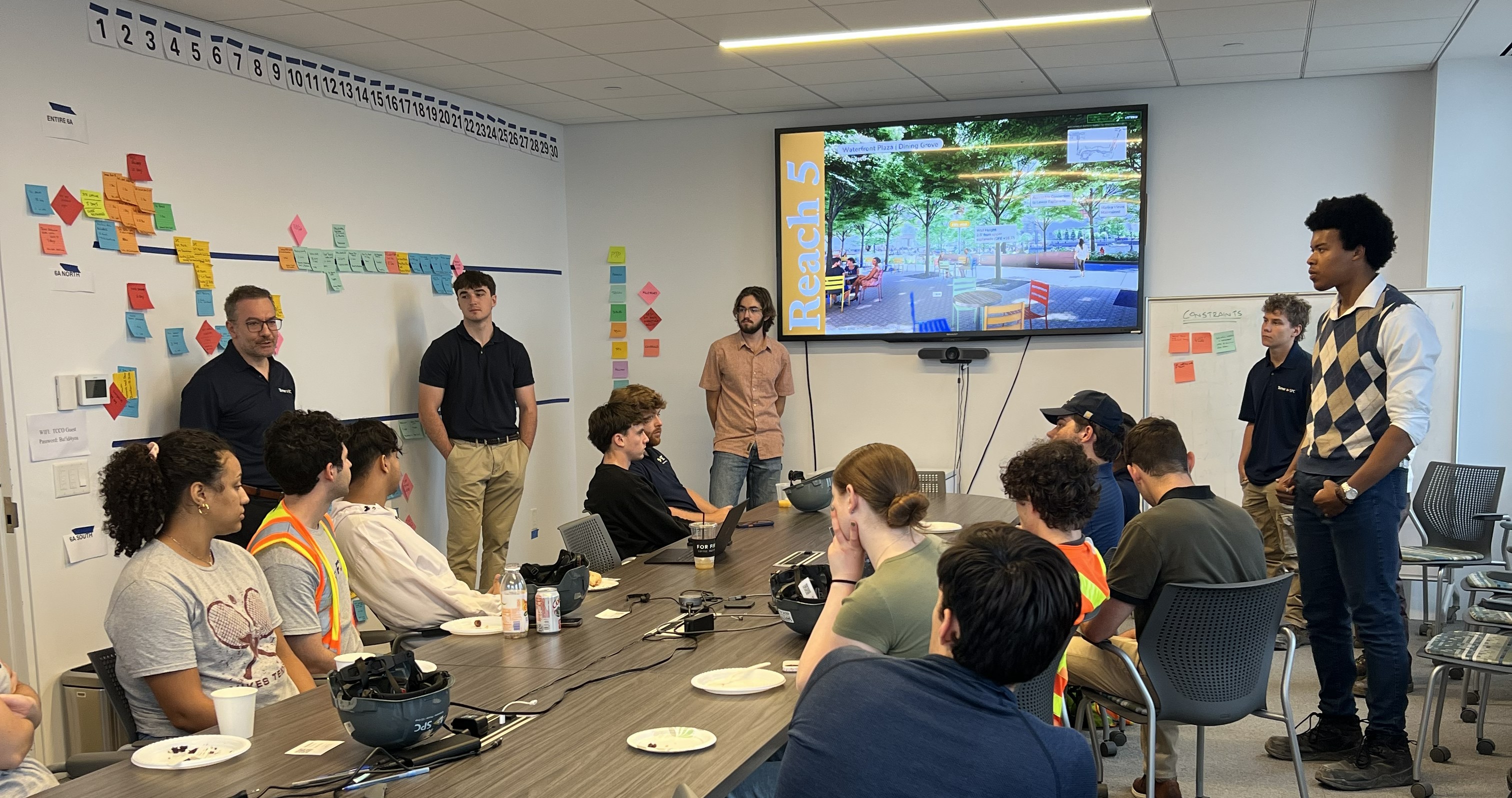
The North/West Battery Park City Resiliency Project will provide critical flood protection for residents and key infrastructure within Battery Park City and surrounding areas through the construction of an integrated coastal flood risk management system. The system will extend from First Place north along the Esplanade, continue east along West Street/Route 9A, and terminate above Chambers Street at a high point on Greenwich Street. As the severity of coastal storm events increases, the project represents a significant investment in the future safety and resiliency of Lower Manhattan, and the millions of people who live, work, and visit the area each year.
Following the presentation, the interns heard from Project Managers Volkan Yargici and Jennifer Sokoloski, who provided an overview of the current project progress They discussed the challenges of delivering a large-scale resiliency project in a dense urban environment and shared insights into the planning, coordination, and collaboration required to keep the project moving forward.
The group then headed into the field for a guided tour led by Project Manager, Eric Gomes, who walked the interns through several active and future phases of construction. Along the route, interns viewed models of the flood wall and sites where flood walls and gates will be installed.
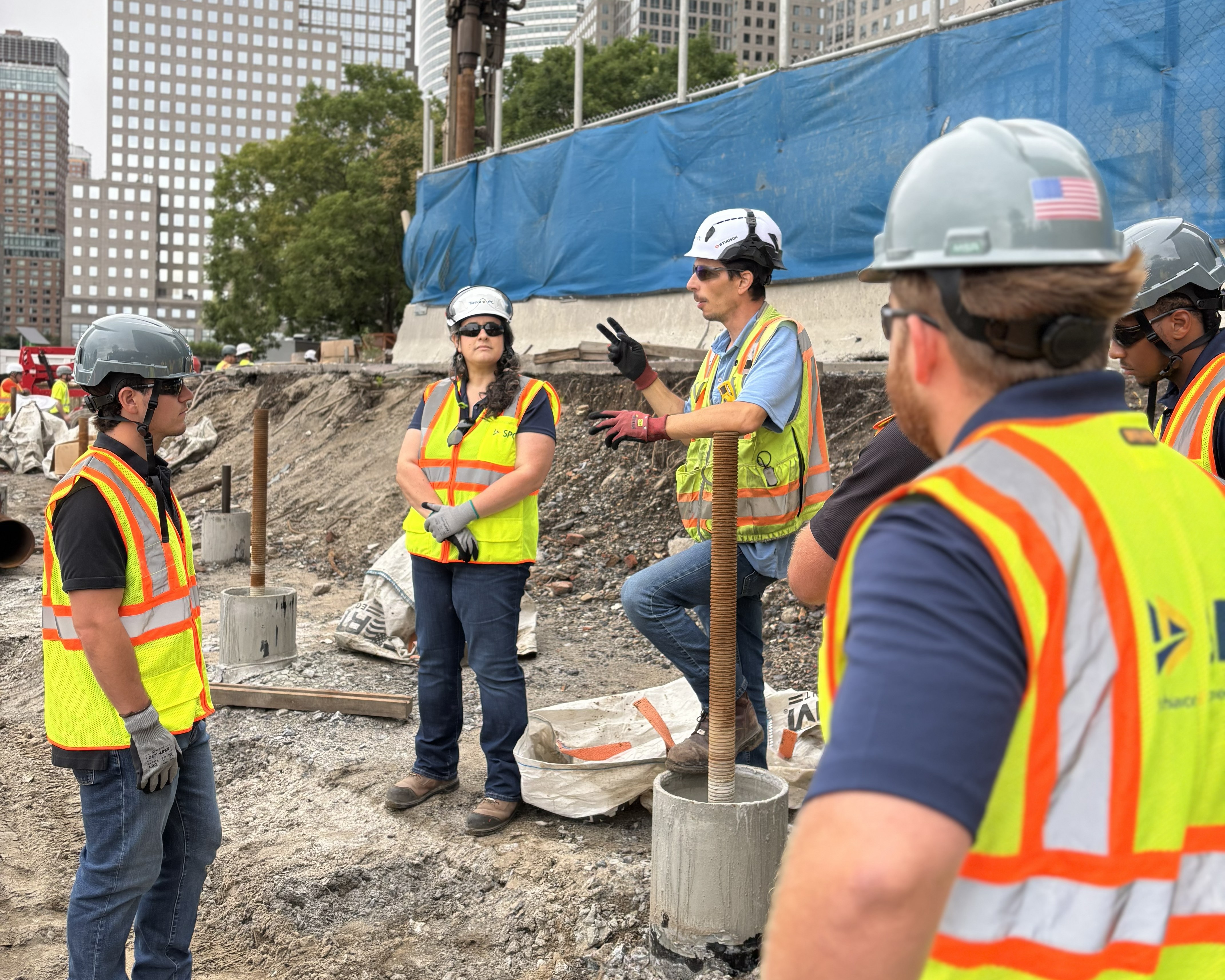
BPCR incorporates a variety of flood mitigation strategies designed to protect Lower Manhattan from storm surge and coastal flooding. These measures include permanent flood walls, deployable flip-up flood gates, enhanced stormwater drainage systems, landscape-integrated barriers, and other resilient infrastructure improvements that work together to create a comprehensive coastal defense system. The project team explained how each element is designed to balance effectiveness, constructability, and integration with the surrounding community.
A key theme throughout the visit was the project's commitment to the community. Team members discussed the importance of stakeholder engagement and the ongoing effort to address community feedback while maintaining project schedules and construction milestones. Interns gained valuable insight into how project teams work closely with residents, business owners, and local agencies to minimize disruption and ensure the project meets the needs of the people it is designed to protect.
The Battery Park City Resiliency Project marks the third tour of the summer, following visits to the Long Slip Fill and Rail Enhancement Project and the Hoboken Rebuild by Design Project. Having the opportunity to visit both the BPCR and Hoboken Rebuild by Design projects provided interns with a unique perspective on how different resiliency initiatives approach similar goals. While both projects are focused on reducing flood risk and increasing community resilience, each faces distinct engineering, environmental, and community-related challenges based on its location and surrounding conditions.
By experiencing different project types, construction methods, and project teams through the summer, interns gain a broader understanding of project delivery and a behind the scenes look at the complexity and diversity of the heavy civil construction industry.